📍 6510 N University Dr, Tamarac, FLTamarac · Broward
CallTextBook
Skip to content
📅 September 4, 2026📁 Restorative Dentistry⏱️ 11 min read📍 Tamarac, FL

Dental Bridges in Tamarac, FL: The Four Types, What They Cost, and How They Compare to an Implant

What a bridge is, which kind suits which gap, what the adjacent teeth have to give up, how long bridges last, and the honest case for choosing one over an implant.

A dentist holds a small dental model while explaining treatment options to a seated patient in the chair

A dental bridge in Tamarac, FL is one of the two standard answers to a missing tooth, and it is the one people know least about. Almost everyone has heard of implants. Far fewer patients arrive knowing what a bridge is, how it attaches, or why a dentist might recommend one over the alternative.

The short version: a bridge fills a gap by using the teeth on either side as anchors. A false tooth spans the space between them. Nothing goes into the jawbone and no surgery is involved, which is why a bridge is usually faster and less expensive up front than an implant. The trade is that the neighbouring teeth have to be reshaped to carry it.

This guide covers the four types, what each one asks of the surrounding teeth, how long bridges last, what they typically cost in Broward County, and the cases where we would tell you an implant is the better answer. Metropolitan Smile Design is a general and cosmetic dentist at 6510 N University Drive in Tamarac, and we handle restorative work in our own office.

Key Takeaways
  • A bridge replaces a missing tooth by anchoring to the teeth on either side of the gap. No surgery and no healing period.
  • The supporting teeth have to be reshaped for crowns, and that reshaping cannot be undone.
  • There are four main types: traditional, cantilever, Maryland and implant supported.
  • Most bridges are completed in two visits over two to three weeks.
  • Bridges commonly last around ten years and often longer, with the gum under the false tooth being the usual point of failure.
  • An implant preserves the jawbone and leaves neighbouring teeth untouched. A bridge is faster, involves no surgery and costs less up front.

What a dental bridge actually is

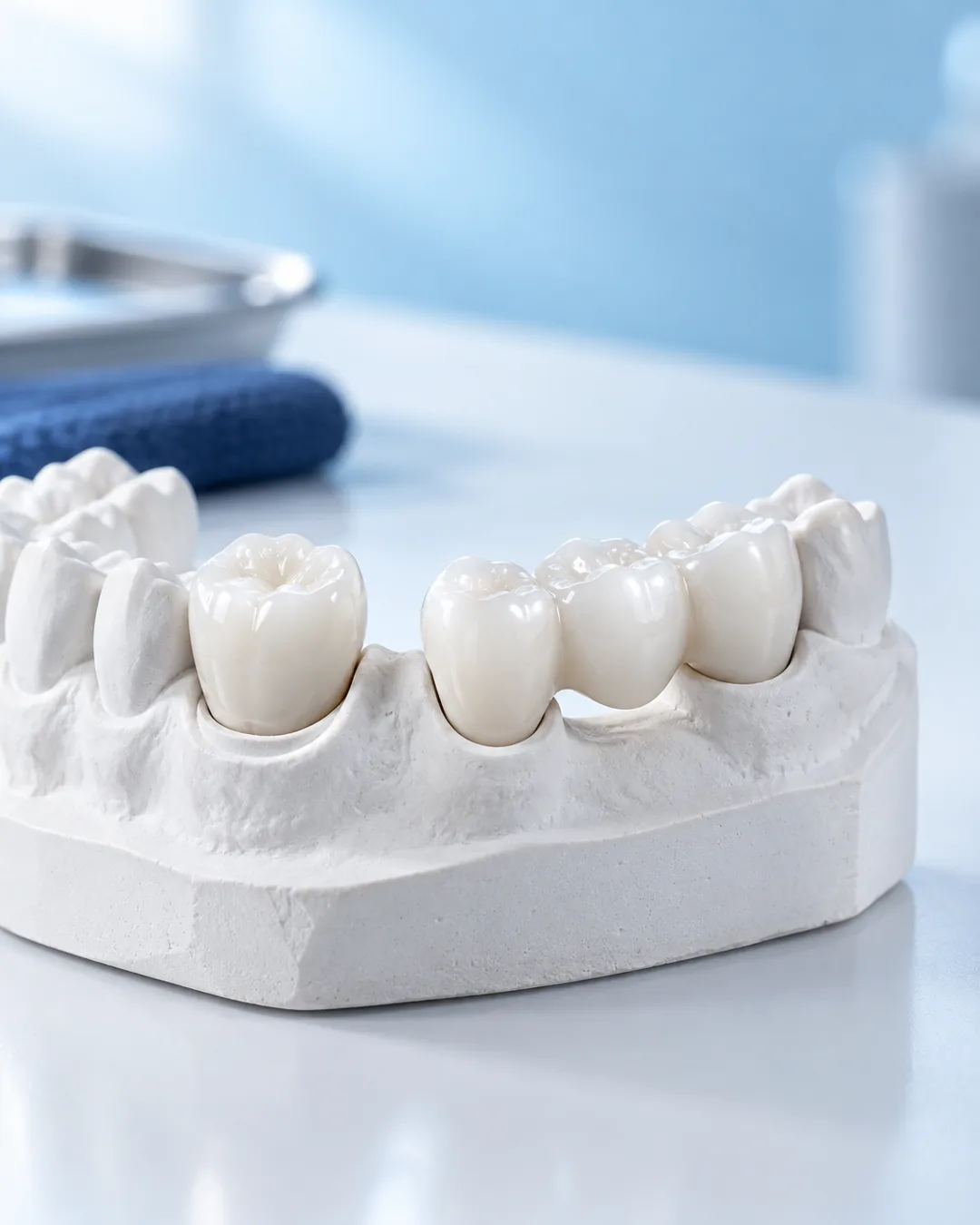
A bridge is a single fixed piece made of three parts joined together. The two outer parts are crowns that fit over the teeth on either side of the gap. Those supporting teeth are called abutments. The middle part is the replacement tooth, called a pontic, and it sits on top of the gum rather than in it.

The whole unit is cemented in place. It does not come out at night, you do not soak it, and for most patients it stops registering as a foreign object within a couple of weeks. That is the main practical difference between a bridge and a removable partial denture.

The critical thing to understand before you agree to one is what happens to the abutment teeth. To make room for the crowns that will hold the bridge, those two teeth are reduced in size. Enamel is removed. If both of those teeth were healthy and untouched, a bridge means permanently altering two good teeth in order to replace one missing one, and that is a real cost that does not appear on the estimate.

It is a different calculation if those neighbouring teeth already have large fillings or already need crowns. In that situation a bridge does two jobs at once and the trade largely disappears.

The four types of bridge

Which one fits depends on where the gap is, how many teeth are missing, and what condition the surrounding teeth are in.

Traditional bridge

The standard, and the one most people get. Crowns on both sides, pontic in the middle. It needs healthy, strong teeth on both sides of the gap. Usually made of porcelain fused to metal, or all-ceramic materials such as zirconia for front teeth where appearance matters most.

Cantilever bridge

Anchored on one side only, used when there is a suitable tooth on just one side of the gap. Because all the chewing force lands on a single support, it is used sparingly and generally not in the back of the mouth where bite forces are highest.

Maryland bridge, also called a resin bonded bridge

The pontic has thin wings that bond to the back surfaces of the adjacent teeth. Very little enamel is removed, which makes it the most conservative option. It is not as strong as a traditional bridge and the bond can come loose, so it is used most often for front teeth and for younger patients where preserving tooth structure matters.

Implant supported bridge

Instead of crowning natural teeth, the bridge is carried by dental implants placed in the jaw. It is used when several teeth in a row are missing, or when the neighbouring teeth are not strong enough to serve as anchors. It costs more and takes longer because it involves surgery and healing, and it does not touch the natural teeth at all. More on that in our guide to dental implants.

A pink dental model of a lower jaw with a gap where one tooth is missing, the removed tooth lying in front of it
The gap is the visible part. What happens to the bone underneath it and to the teeth beside it is the part that decides the treatment.

Why the gap matters more than it looks

Patients often live with a missing back tooth for years on the reasonable-sounding logic that nobody can see it. The problem is that a gap is not a stable situation. The mouth reorganises around it.

  • The opposing tooth drifts down or up into the space. A tooth with nothing to bite against keeps erupting. Over a few years it can move far enough that it complicates any future restoration.
  • The neighbouring teeth tilt toward the gap. Once they have tilted, a bridge may no longer fit cleanly and orthodontic work can be needed first.
  • The bite redistributes. Chewing shifts to the other side, which loads those teeth harder and is associated with jaw joint discomfort in some patients.
  • Bone volume decreases where the root used to be. The jawbone is maintained by the pressure of a root. Without one, that area of bone gradually resorbs. This is the argument for an implant, which does load the bone, and it is the one thing a conventional bridge cannot do.
  • Cleaning gets harder. Tilted teeth create spaces that trap food and are difficult to floss, which raises the risk of decay and gum problems. Our guide to gum disease treatment covers where that leads.

None of this happens quickly, and none of it is a reason to panic. It is a reason not to leave the decision open indefinitely. The options available for a gap that is six months old are generally better and cheaper than the options for the same gap at six years.

What the appointments involve

A traditional bridge is normally two visits spread over two to three weeks.

The exam first

Before anything is planned we need X-rays and an exam, because the answer depends on the health of the roots and the bone around the abutment teeth. A tooth that looks fine can have a problem at the root that rules it out as a support. This is what the new patient exam is for, and it includes digital X-rays.

First appointment

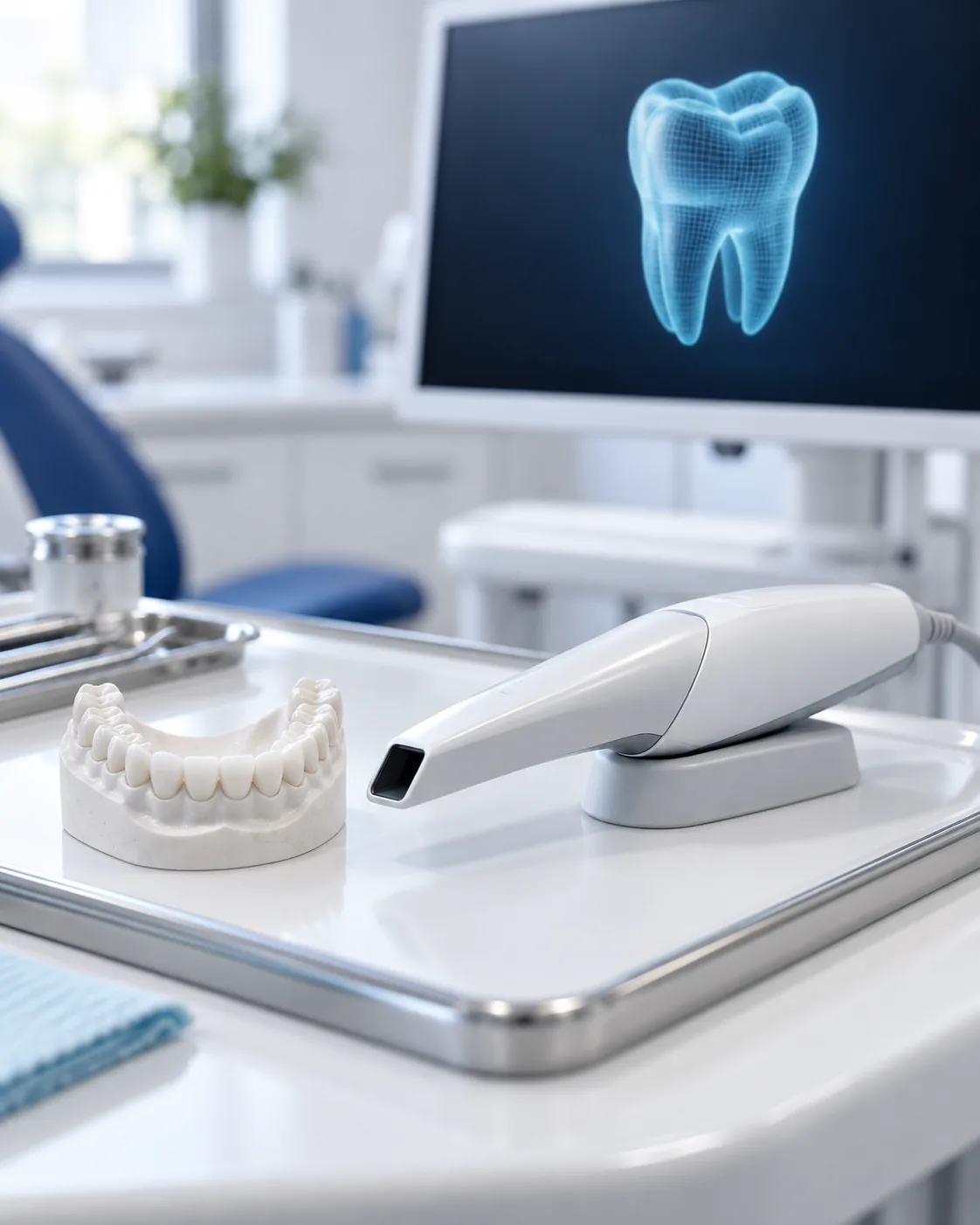
The abutment teeth are numbed and reshaped for the crowns. An impression or a digital scan is taken and sent to the lab. A temporary bridge is fitted so you leave with the gap covered and the prepared teeth protected. Most people report the appointment as long rather than uncomfortable.

Between visits

The lab builds the bridge, usually two to three weeks. The temporary is not as strong as the final piece, so avoid very hard or very sticky food on that side and be careful flossing around it.

Second appointment

The temporary comes off, the permanent bridge is tried in, and the fit and bite are checked and adjusted before it is cemented. Shade and contour are confirmed with you while it can still be changed. Once cemented, it is fixed in place.

After

Some sensitivity to hot and cold for a few days is normal. The bite can feel slightly unfamiliar for a week or so. If it still feels high after that, call us, because a bridge that sits proud of the bite puts uneven force on the supporting teeth and it is a two minute adjustment.

Not sure whether you need a bridge or an implant?

Come in for an exam with digital X-rays and we will show you both options for your specific gap, with the real costs of each. No pressure to decide in the chair.

Book an appointment

What a bridge costs in Broward County

Prices vary by the type of bridge, the material, how many units are involved and what condition the supporting teeth are in. These are typical ranges for Broward County rather than a quote, and the only accurate number comes from an exam.

  • Traditional three unit bridge: commonly around $2,000 to $5,000 for the complete bridge, meaning two crowns plus the replacement tooth.
  • Maryland bridge: generally less, because far less tooth preparation and lab work is involved.
  • Cantilever bridge: broadly similar to a traditional bridge with one fewer crown.
  • Implant supported bridge: more, because it includes the implants and the surgical stage. See our breakdown of dental implant costs in Broward County.
  • Additional work: if an abutment tooth needs treatment before it can carry a bridge, that is quoted separately.

On the insurance side, most dental PPO plans treat a bridge as a major restorative procedure and commonly cover around half of the cost, subject to your deductible, any waiting period, and your annual maximum. That annual maximum is the constraint people underestimate: a bridge can consume the whole year’s benefit on its own, which is a strong argument for starting the work early in a benefit year rather than in December.

If you have a missing tooth clause in your policy, meaning the tooth was lost before the plan started, coverage may be reduced or excluded, and that is worth checking before treatment rather than after. If you have no dental insurance at all, our In-House Savings Plan starts at $79.99 a year, and our guide to seeing a dentist without insurance in Broward County lays out the alternatives.

A dentist in blue gloves holds a clear model of a dental implant while talking with a seated patient
Seeing both options as physical models makes the difference far clearer than any description does.

Bridge or implant: how the decision is actually made

There is no universally better answer, and any dentist who gives you one without looking in your mouth is selling rather than advising. The decision turns on the condition of the neighbouring teeth, the bone, your medical history, your timeline and your budget.

A bridge tends to be the better choice when

  • The teeth on either side of the gap already have large fillings or already need crowns, so nothing healthy is being sacrificed.
  • There is not enough bone for an implant and you would rather not have a bone graft.
  • A medical condition or medication makes oral surgery inadvisable.
  • You need the gap closed in weeks rather than months.
  • The up front cost is the deciding constraint.

An implant tends to be the better choice when

  • The teeth beside the gap are healthy and untouched, and you would rather not have them reshaped.
  • Preserving the jawbone in that area matters, which it does more the younger you are.
  • You want the option that most often lasts longest, and you are comfortable with a surgical procedure and a healing period of several months.
  • The gap is at the very back with no tooth behind it, where a conventional bridge has nothing to anchor to.

For several missing teeth in a row, the conversation broadens to include partial dentures and implant supported options. Our comparison of All-on-4 and dentures covers the full arch end of that spectrum, and crowns and dentures covers the rest.

How to make a bridge last

Bridges commonly last around ten years and frequently longer. When one fails early, it is almost never the porcelain that gave out. It is decay in an abutment tooth at the crown margin, or gum disease under the pontic.

Which means the whole game is cleaning underneath the false tooth, and an ordinary flossing routine does not reach there because the bridge is one solid piece.

  • Use a floss threader or superfloss to pass floss under the pontic and along the gum. Once a day. This is the single most important habit for a bridge.
  • A water flosser is easier for most people to stick with and works well around bridgework. Many patients use both.
  • Interdental brushes for the spaces beside the abutment teeth if they are large enough to take one.
  • Keep your cleaning appointments. A hygienist can see and reach margins you cannot.
  • Do not chew ice or hard candy, and if you grind your teeth at night, say so, because grinding shortens the life of any restoration.

If a bridge ever feels loose, or if the gum under it becomes sore or bleeds, get it looked at promptly. A bridge that has begun to leak at one margin can often be saved. One left for a year usually cannot.

Getting a bridge in Tamarac

Metropolitan Smile Design is at 6510 N University Dr, Tamarac, FL 33321, and we see patients from across north-west Broward including Coral Springs, Margate, Sunrise and Lauderhill. Call (954) 322-3865 or write to info@metropolitansmiledesign.com.

  • General and cosmetic dentistry handled in our own office.
  • Digital X-rays, so you can see the roots and bone rather than take our word for it.
  • Bridges, crowns, dentures and implants, so the comparison is made with you rather than by a referral.
  • Bilingual team, English and Spanish.
  • Monday to Friday, 8:00 AM to 5:00 PM. Same-day appointments available five days a week.
  • New patients: exam, digital X-rays and a basic cleaning for $65. Details on the new patient offer page.

For independent patient information on bridges and other tooth replacement options, the American Dental Association publishes plain-language material at MouthHealthy.

Frequently Asked Questions

How long does a dental bridge last?

Around ten years is typical and many last considerably longer. Lifespan depends far more on cleaning than on the bridge itself, because the usual cause of failure is decay in a supporting tooth or gum disease under the false tooth rather than the porcelain breaking. Daily cleaning under the pontic with a floss threader or water flosser is what makes the difference.

Does getting a bridge hurt?

The appointments are done under local anaesthetic, so you should not feel pain during the preparation. Afterwards it is common to have some sensitivity to hot and cold for a few days, and the bite can feel slightly unfamiliar for about a week. Most patients describe the first appointment as long rather than painful. If sensitivity is severe or lasts beyond a couple of weeks, call the office.

Is a bridge cheaper than an implant?

Up front, generally yes. A traditional three unit bridge in Broward County commonly runs around $2,000 to $5,000, and an implant with its crown typically costs more because it involves surgery and a healing period. Over a longer horizon the comparison narrows, since implants often last longer and a bridge may need replacing, and replacing a bridge means redoing the crowns on the supporting teeth as well.

Do the teeth next to the gap have to be filed down?

For a traditional or cantilever bridge, yes. The supporting teeth are reshaped so crowns can fit over them, and that reshaping is permanent. A Maryland bridge removes far less enamel and is the most conservative option, though it is less strong and is used mainly for front teeth. An implant does not touch the neighbouring teeth at all, which is often the deciding factor when those teeth are healthy.

Will dental insurance cover a bridge?

Most dental PPO plans classify a bridge as major restorative work and commonly pay around 50 percent, subject to your deductible, any waiting period and your annual maximum. Two things catch people out: a bridge can use up an entire year’s maximum on its own, and many policies have a missing tooth clause that limits coverage if the tooth was lost before the plan began. Bring your plan details to the exam and we will check both before treatment starts.

How do I clean under a dental bridge?

Use a floss threader or superfloss to pass floss beneath the false tooth and along the gum once a day, since ordinary flossing cannot get under a bridge because it is one solid piece. A water flosser works well and most people find it easier to keep up with. The gum under the pontic is where bridges fail, so this habit matters more than any other.