Bleeding when you brush is not normal, and it is not something to wait out. It is the first and most ignored sign of gum disease — the leading cause of adult tooth loss. This guide explains the stages, the real options for gum disease treatment in Broward County, and how far along is still reversible.

8 Early Warning Signs You Should Not Ignore
Gum disease is famously quiet. It rarely hurts until it is advanced, which is exactly why so many people arrive at the dentist already past the reversible stage. Watch for these:
- Bleeding when you brush or floss. The single most common first sign. Healthy gums do not bleed.
- Red, puffy or tender gums. Healthy gum tissue is firm and pale pink, not shiny and swollen.
- Persistent bad breath or a bad taste that comes back no matter how well you brush.
- Gums pulling away from your teeth. Teeth that suddenly look longer are usually a sign of recession, not growth.
- New sensitivity to hot, cold or sweet, especially near the gum line where the root is now exposed.
- Teeth that feel loose or that seem to have shifted position.
- A change in your bite — your teeth no longer meet the way they used to.
- Dentures or a partial that stopped fitting well. The ridge underneath can change as bone is lost.
One or two of these is a reason to book an exam. Loose teeth or a changed bite means calling this week, not next season.
The Stages: Gingivitis vs. Periodontitis
Stage 1 — Gingivitis (reversible)
Plaque builds up along the gum line and hardens into tartar, which cannot be brushed off. The gums become inflamed and bleed easily. At this stage nothing permanent has happened: the bone and the fibers holding your teeth are intact. A professional cleaning to remove the tartar, plus consistent home care, typically returns the gums to health within weeks.
Stage 2 — Early periodontitis
The inflammation moves below the gum line. Small pockets form between tooth and gum, and the body begins to lose a little of the bone that anchors the tooth. Pockets deepen from a healthy 1–3 millimeters to around 4–5 millimeters. This is where a deep cleaning enters the picture.
Stage 3 — Moderate to advanced periodontitis
Pockets deepen further, more bone is lost, and teeth start to loosen. Gums may recede noticeably and abscesses can develop. Treatment at this stage is about stopping the progression and saving what is there. Some teeth may not be savable.
Why It Is More Common Than You Think
According to the CDC, roughly 47% of adults over 30 have some form of periodontal disease, and that climbs to about 60% of adults 65 and older. Around a third of adults over 65 have already lost six or more teeth. Most of them never felt it happening.
Certain things raise your risk considerably:
- Smoking or vaping — the biggest controllable risk factor, and it also masks bleeding, so the disease hides longer
- Diabetes — the relationship runs both ways: high blood sugar worsens gum disease, and gum infection makes blood sugar harder to control
- Dry mouth from medications — extremely common in older adults on several prescriptions
- Genetics — some people are simply more susceptible
- Hormonal changes — pregnancy and menopause both affect gum tissue
- Skipped cleanings — tartar can only be removed professionally

The Link Between Your Gums and Your Body
Gum disease is a chronic bacterial infection with an inflammatory response attached, and research has repeatedly found associations between periodontal disease and conditions elsewhere in the body — including heart disease, poorly controlled diabetes, respiratory infections and complications in pregnancy.
Association is not the same as cause, and no dentist should tell you that treating your gums will cure a heart condition. But the practical takeaway is sound: your mouth is not sealed off from the rest of you, and an untreated chronic infection is worth resolving on its own merits.
How Gum Disease Is Actually Treated
Treatment is matched to the stage. It almost always starts conservatively.
A thorough exam and measurements
Before anything else, the depth of the pockets around each tooth is measured and X-rays are taken to see the bone level. This is what separates gingivitis from periodontitis, and it is why a real diagnosis cannot happen over the phone.
Professional cleaning
For gingivitis, removing plaque and tartar above and just below the gum line is usually enough. Combined with better home technique, the gums typically settle down within a few weeks.
Deep cleaning (scaling and root planing)
When pockets have formed, cleaning has to go deeper. Scaling removes tartar from below the gum line; root planing smooths the root surface so the gum tissue can reattach and bacteria have less to cling to. It is usually done with the area numbed, often across two visits. Most patients describe it as much easier than they expected.
Periodontal maintenance
After a deep cleaning, the cleaning interval usually shortens — commonly every three to four months instead of every six. This is not an upsell; it is what keeps pockets from repopulating. Skipping it is the most common reason treated gum disease returns.
Restoring what was lost
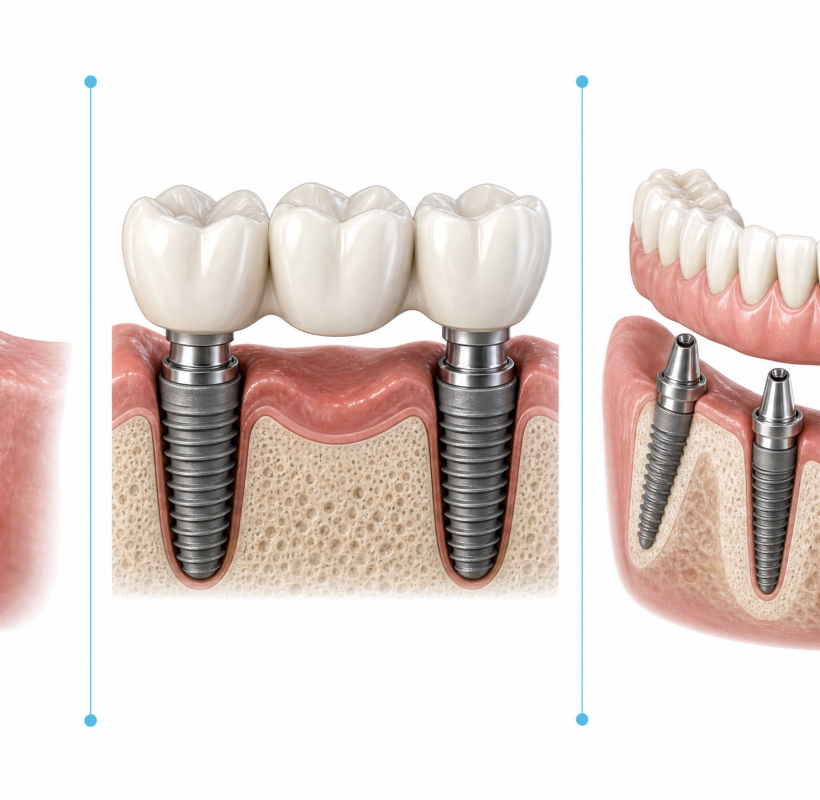
When teeth have already been lost or cannot be saved, the conversation shifts to replacement once the gums are stable and healthy. Dental implants, bridges and dentures all require a healthy foundation first — which is exactly why gum treatment comes before cosmetic work, never after.
What Treatment Costs in Broward County
Costs vary with severity and how many areas of the mouth are involved. As a general guide for Broward County:
- Comprehensive exam with X-rays: commonly $150–$350
- Routine cleaning: commonly $85–$200
- Deep cleaning (scaling and root planing): commonly $150–$400 per quadrant, and a full mouth is four quadrants
- Periodontal maintenance visit: commonly $110–$250
Only an exam produces a real number, because only an exam shows how many quadrants are actually involved. If cost is the reason you have been putting this off, read our guide to affordable dental care in Broward County — and know that our In-House Savings Plan includes cleanings and a 30% discount on treatment for patients without insurance.
Keeping It From Coming Back
- Brush twice daily for a full two minutes, angling the bristles toward the gum line rather than scrubbing straight across.
- Clean between your teeth every day. Floss, interdental brushes or a water flosser — whichever one you will actually use is the right one.
- Keep your maintenance interval. If your dentist put you on three or four months, that interval is the treatment.
- Address dry mouth. If medications have left your mouth dry, say so — there are practical fixes, and dry mouth accelerates gum disease.
- Manage your diabetes. The two conditions feed each other, and improving one genuinely helps the other.
- Stop smoking. Nothing else on this list moves the needle as much.
Why Choose Metropolitan Smile Design
Metropolitan Smile Design is a dental practice in Tamarac, FL, serving patients across Broward County — from Coral Springs and Margate to Lauderhill, Sunrise, Plantation and Fort Lauderdale.
- A real diagnosis first — measurements and X-rays before any treatment plan
- Comfort-first care, including options for patients who dread the chair
- A genuine spa environment designed to calm rather than intimidate
- Bilingual care in English and Spanish
- A judgment-free team — if it has been years, you will not hear about it
- Same-day appointments available five days a week
- An In-House Savings Plan from $79.99 a year for patients without dental insurance
If you are also unhappy with how your smile looks once your gums are healthy, our guide to choosing a cosmetic dentist in Tamarac is the natural next read.

Frequently Asked Questions
Can gum disease be reversed?
Gingivitis, the early stage, is fully reversible. A professional cleaning to remove tartar plus consistent brushing and flossing usually restores healthy gums within a few weeks. Once it progresses to periodontitis and bone has been lost, that bone loss is permanent. Treatment can stop the disease from advancing and stabilize your teeth, but it cannot regrow what is gone. This is why bleeding gums are worth acting on immediately.
Is a deep cleaning painful?
The area is numbed first, so the procedure itself should not hurt. Most patients report the anticipation was worse than the appointment. Afterwards you can expect some tenderness and temporary sensitivity to hot and cold for a few days, which over-the-counter pain relief handles well. It is usually split across two visits so you are not numb across your whole mouth at once.
How much does gum disease treatment cost in Broward County without insurance?
It depends on severity. A comprehensive exam with X-rays commonly runs $150 to $350, a routine cleaning $85 to $200, and a deep cleaning roughly $150 to $400 per quadrant, with a full mouth being four quadrants. Only an exam can tell you how many quadrants are actually involved. Our In-House Savings Plan starts at $79.99 a year and includes exams, X-rays and cleanings plus 30% off treatment, which is often the cheapest route for patients without insurance.
Why do I need cleanings every three months instead of every six?
After treatment for periodontitis, the pockets around your teeth are deeper than normal, and bacteria repopulate them faster than they would in a healthy mouth. A three to four month interval keeps them from re-establishing. Research consistently shows this interval is what prevents relapse, so periodontal maintenance is genuinely part of the treatment rather than an ordinary cleaning scheduled more often.
Can I get dental implants if I have gum disease?
Not until the gum disease is treated and stable. Implants fuse to your jawbone, so they need healthy bone and healthy surrounding tissue to succeed. Placing an implant into an actively infected mouth substantially increases the risk of failure. The normal sequence is to treat the gums first, confirm stability, then plan implants. In cases where significant bone has already been lost, bone grafting may be discussed as part of the plan.
My gums bleed but they do not hurt. Should I still come in?
Yes. Painless bleeding is the classic presentation of early gum disease, and the absence of pain is precisely what makes it dangerous — people wait until something hurts, and by then bone has usually been lost. Healthy gums do not bleed during normal brushing or flossing. If yours do consistently, book an exam.
Bleeding Gums? Find Out What Stage You Are Actually At.
A comprehensive exam with digital X-rays tells you whether this is a cleaning or a treatment plan — and the answer is usually better than people fear. New patients: exam, X-rays and cleaning for $65.